Vera Rubin-ready
Designed for next-generation AI platforms: the power density, DC architecture and liquid cooling they call for.
DG Energy & Infrastructure
An on-site power plant. Built for AI today and the demands of tomorrow.
Data centers built close to the customer, on land that fits the community.
Designed for existing industrial buildings and new greenfield developments. Initial behind-the-meter operation does not depend on a utility interconnection queue.
See how it works Talk to us →Each block delivers 10 MW of net IT. Availability is shown by state and is conceptual and subject to change.
What sets us apart
Twelve reasons the power, building and cooling work as one system. We did not adapt an enterprise data center.
Designed for next-generation AI platforms: the power density, DC architecture and liquid cooling they call for.
A standardized, factory-built design repeated at every site, with delivery subject to project milestones.
On-site solid-oxide fuel cells generate power where AI compute runs.
Fuel cells convert fuel to electricity electrochemically. Project-specific equipment and permitting requirements still apply.
Dedicated on-site generation reduces reliance on utility interconnection. Grid-fed portions of hybrid campuses still require utility service.
One engineered power distribution standard from the fuel cell to the rack, repeated in every building.
One standardized H building across many sites. Design once, deploy everywhere.
Direct-to-chip liquid cooling with dry heat rejection instead of evaporative cooling. This does not mean the entire campus uses no water.
Add net IT capacity one block at a time, from a single block to multi-gigawatt campuses.
About 3.34 MW of IT and 16 compute positions: the same building block at every site.
180 kW AC/DC, scaling up to 480 kW DC. Design specifications, not measured performance.
Run AC, DC or a mix in the same building, changing pod by pod as AI hardware evolves.
The constraint
New large loads face multi-year waits. In Northern Virginia, Dominion estimates roughly four to seven years for a new large data center connection.
Why the system is broken →Our answer
Independent 10 MW net IT blocks put generation beside the compute. Each block has its own fuel cells, supercapacitors, battery ride-through and cooling.
Standardized distribution, swappable AC or DC cassettes and direct-to-chip cooling with dry heat rejection connect the gas meter to the AI rack.
Explore our solution →Campus tour

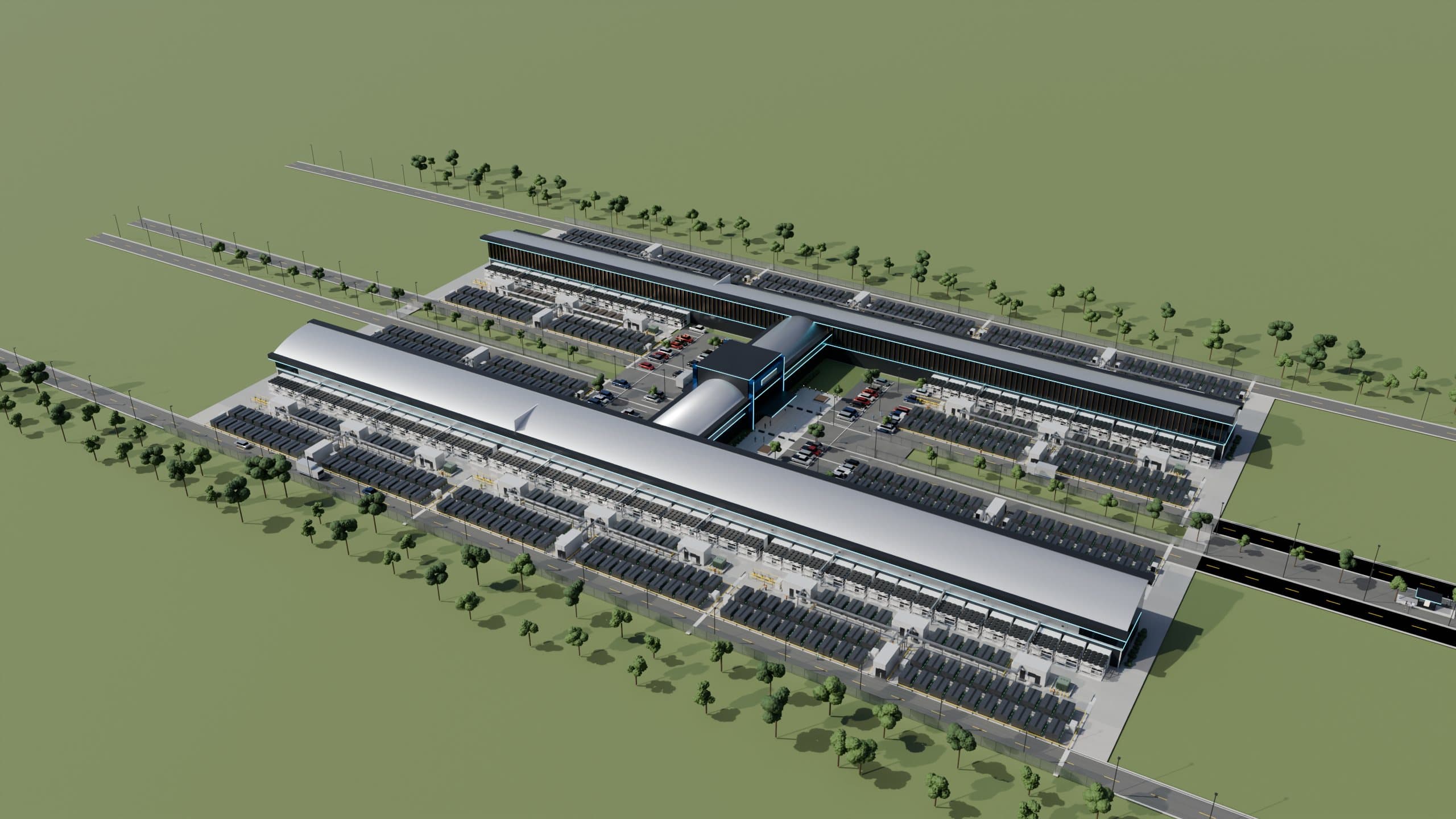
On-site generation, compute space and direct-to-chip liquid cooling. The H building joins two compute legs through a central connector.
The film moves from an aerial view of the H building to fuel-cell equipment, distribution, cooling, compute pods and racks. Independent blocks deliver 10 MW net IT; generation capacity is separate from net IT capacity.
180 kW AC/DC, scaling up to 480 kW DC. These are design specifications, not measured performance.
Dry heat rejection avoids evaporative cooling. Other water needs and local impacts require site-specific validation. Repeated buildings illustrate a design concept, not deployed capacity or the state inventory.
We are the power plant at the rack. Conceptual and subject to design development; no guaranteed site outcomes.
Independent blocks
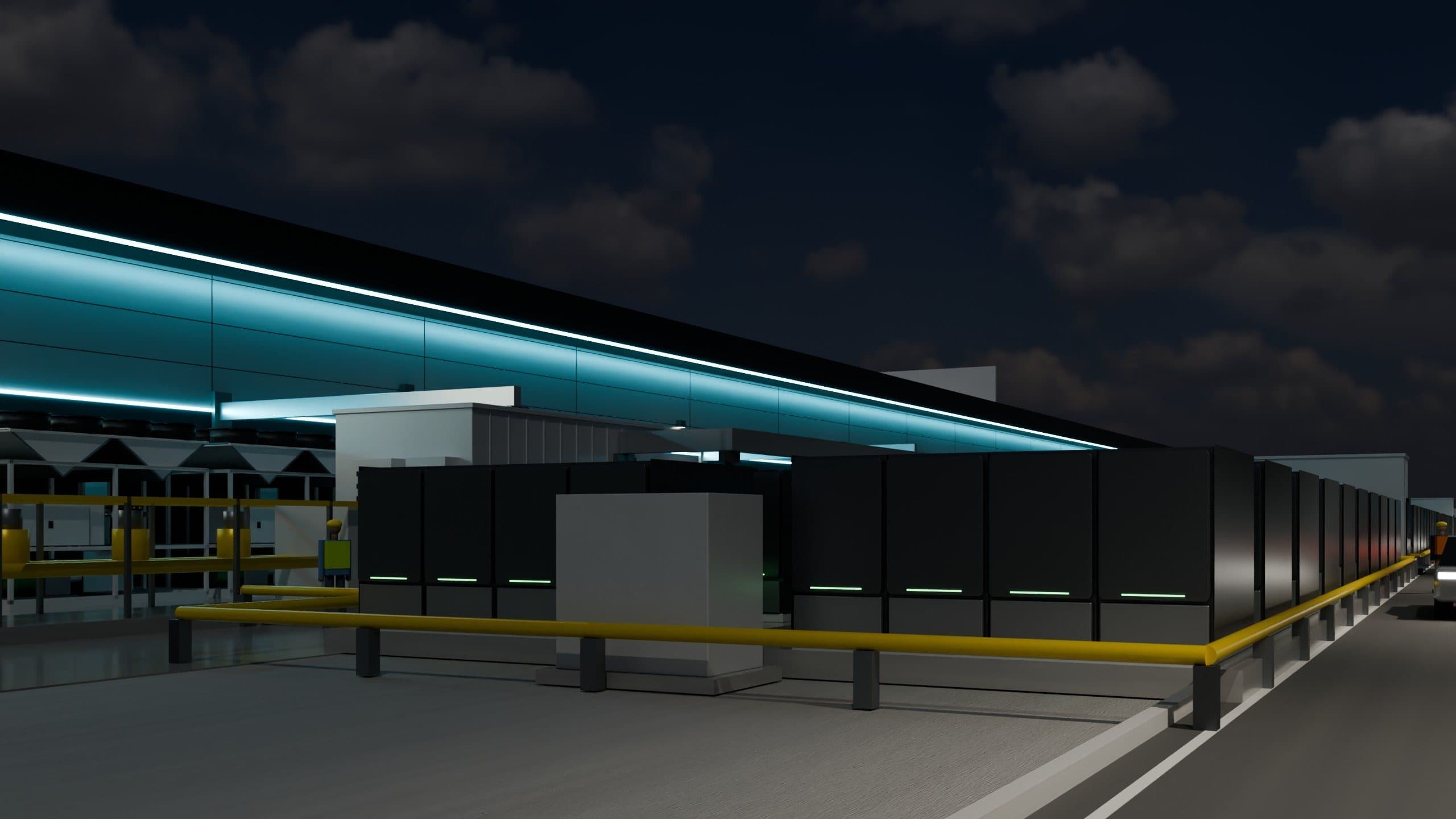
Each 10 MW block is designed with its own spare power and cooling, without a shared electrical bus or shared cooling between blocks. Medium-voltage distribution places the power plant approximately 200 feet from the GPUs in the illustrated design.
Initial behind-the-meter operation does not depend on a utility interconnection queue. A grid tie can add support and an outlet for export, subject to utility agreements and local approvals.
If a tenant's needs change, the generation system is designed to serve another tenant or a different load. Export is an option only where approved. Manufactured generation and cooling equipment is designed for redeployment where site conditions permit.
Design intent, not demonstrated fault containment or operating availability. Block separation does not establish independence of upstream fuel supply or utilities. Grid ties, export and equipment redeployment require project-specific validation and approvals.
Beyond AI
Across existing industrial buildings and new greenfield developments, blocks designed for AI compute can serve other demanding loads. The power plant is an adaptable asset for AI-driven industrialization. Compute pods and distribution are designed for compute redundancy and ride-through; robotics, automated manufacturing and cold storage require configurations matched to their own loads.
On-site generation can support robot fleets and the facilities that build and test them.
On-site generation can support automated production lines in existing or newly developed facilities.
Power made on site can support refrigeration and warehouse automation.
Blocks can add capacity in steps as industrial processes move to electric power.
An approved grid tie can enable power export where the utility and local approvals allow.
Dedicated power can support public-sector workloads. Security requirements are scoped project by project.
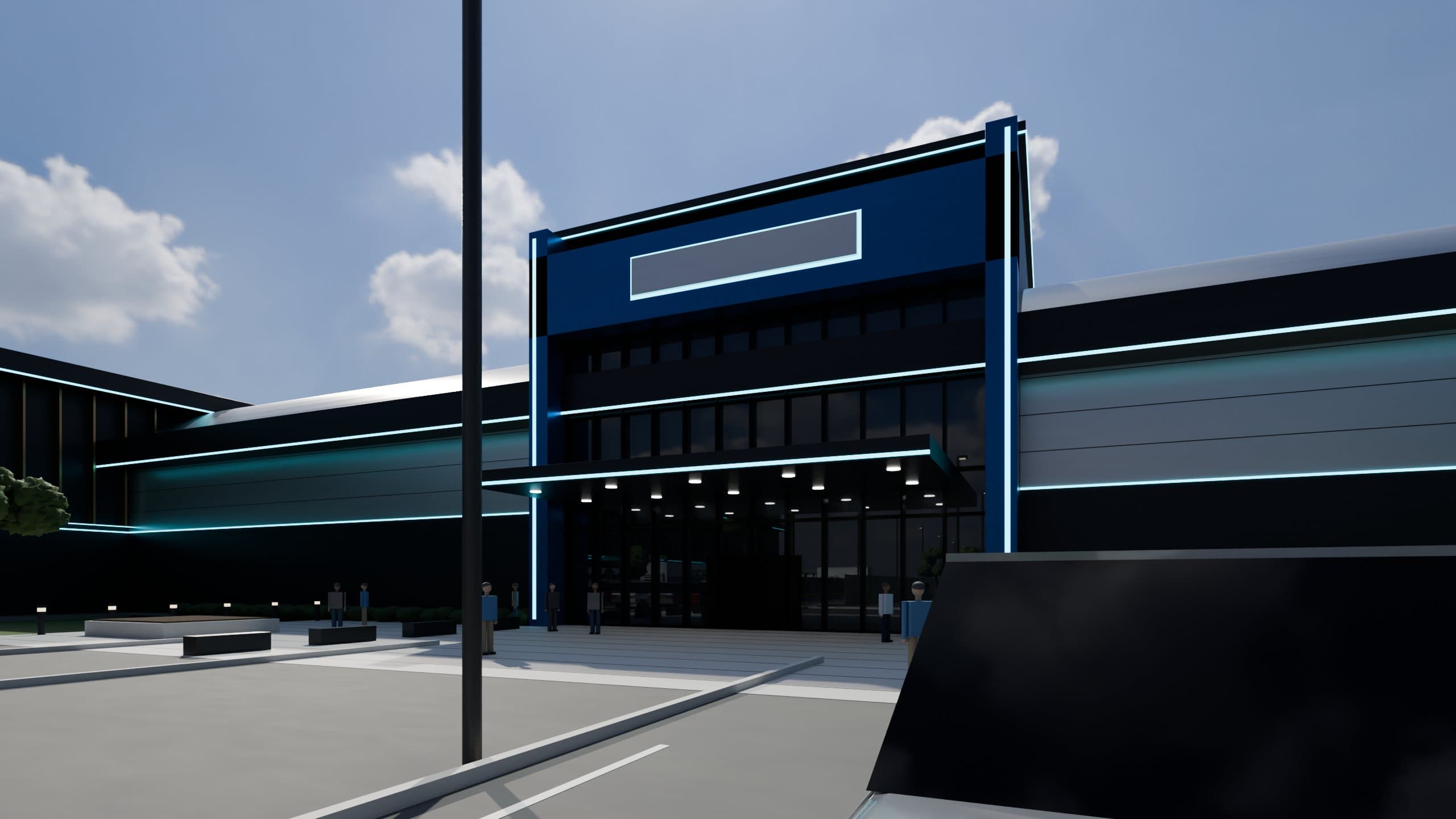
A power plant. Many possible uses.
Potential uses shown for illustration. Conversion is not guaranteed: distribution, controls and cooling must suit the new load. Grid resale requires agreements and approvals; no resale yield, residual value or underwriting outcome is established.
Speed to power
AI compute live, one 10 MW net IT block at a time →
Illustrative; not to scale. This comparison describes dedicated on-site generation. Grid-fed capacity, grid ties and export require utility service or agreements and approvals. Delivery is conceptual and subject to development milestones; no delivery date is promised. ¹ Dominion estimate for Northern Virginia large-load connections; source 1.
Built to scale
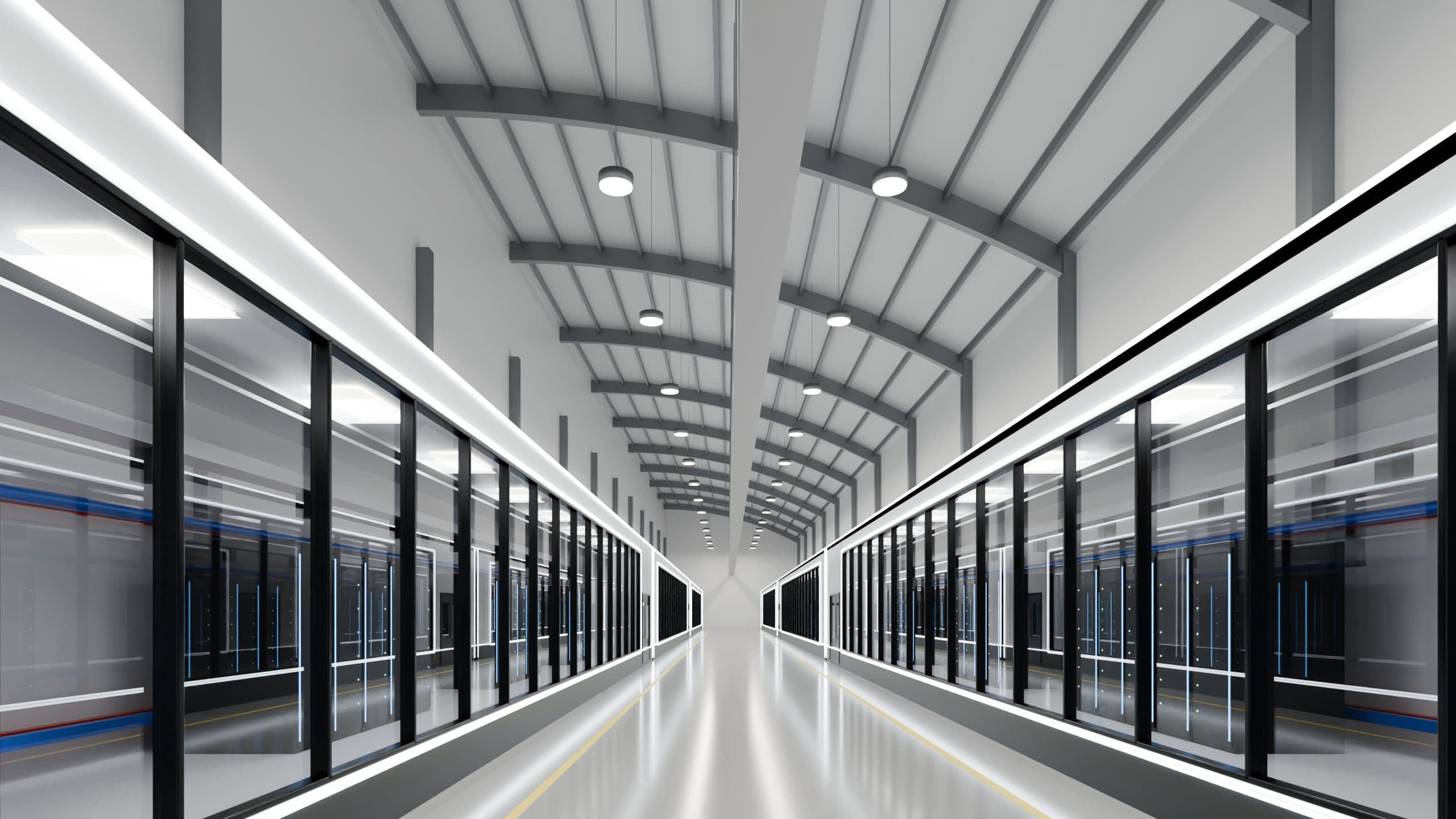
Meet your AI guide
Explore on-site power, the H building and AI cooling with our interactive guide.
Meet the DGEI guide →