Vera Rubin-ready
Designed for next-generation AI platforms: the power density, DC architecture and liquid cooling they call for.
Why DGEI
Purpose-built for AI workloads, from on-site power generation to the rack.
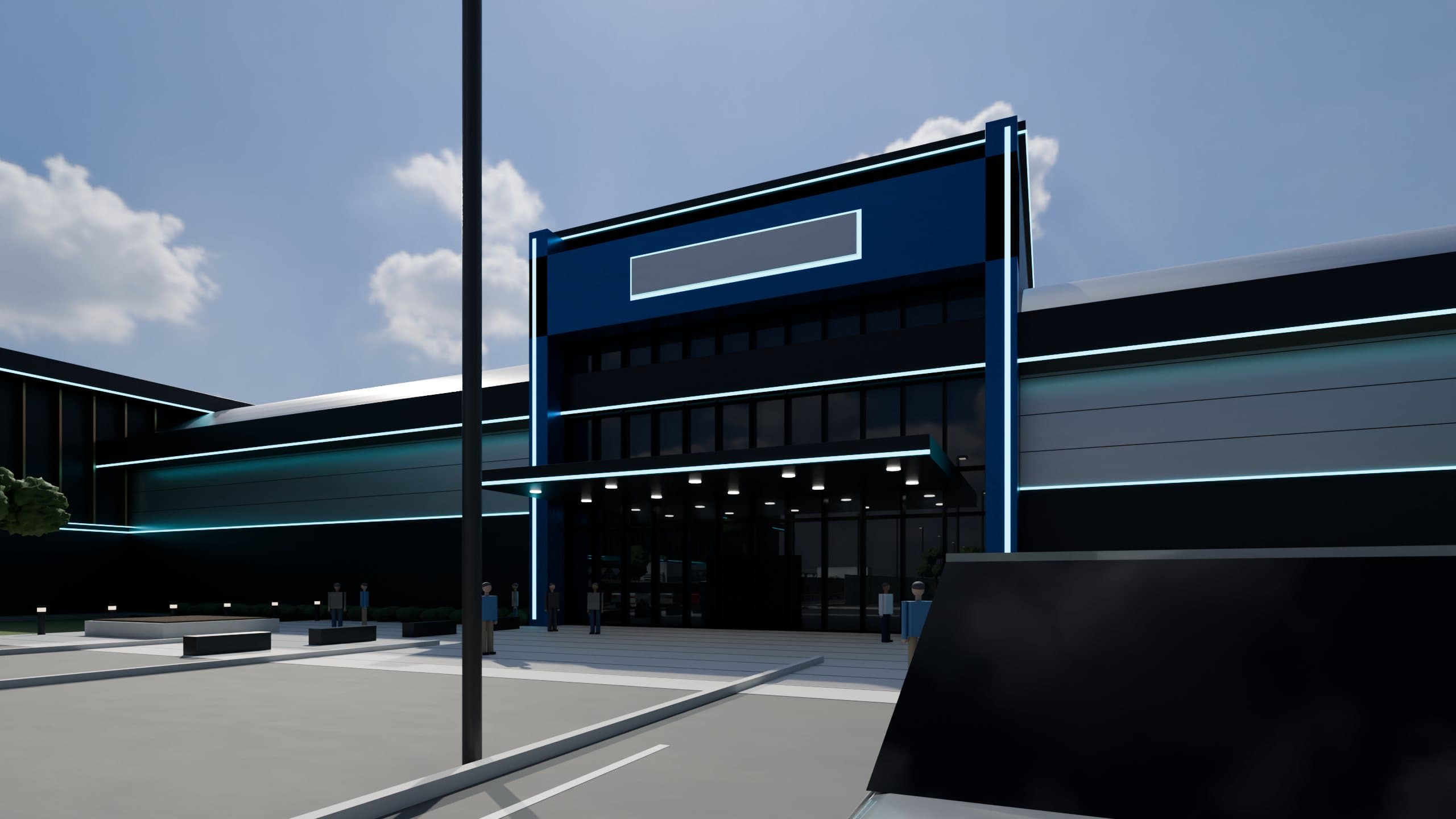
Designed for next-generation AI platforms: the power density, DC architecture and liquid cooling they call for.
A standardized, factory-built design repeated at every site, with delivery subject to project milestones.
On-site solid-oxide fuel cells generate power where AI compute runs.
Fuel cells convert fuel to electricity electrochemically. Project-specific equipment and permitting requirements still apply.
Dedicated on-site generation reduces reliance on utility interconnection. Grid-fed portions of hybrid campuses still require utility service.
One engineered power distribution standard from the fuel cell to the rack, repeated in every building.
One standardized H building across many sites. Design once, deploy everywhere.
Direct-to-chip liquid cooling with dry heat rejection instead of evaporative cooling. This does not mean the entire campus uses no water.
Add net IT capacity one power block at a time, from a single block to multi-gigawatt campuses.
About 3.34 MW of IT and 16 compute positions: the same building block at every site.
180 kW minimum per rack. AC at 180–300 kW; DC up to 480 kW.
Run AC, DC or a mix in the same building, changing pod by pod as AI hardware evolves.
Firm power aligned with your hardware needs. Racks from 180 kW up to 480 kW, AC or DC, and direct-to-chip liquid cooling. One interface from gas meter to rack.
A standardized, repeatable product across a multi-state pipeline. Each campus adds capacity in predictable 10 MW net IT increments.
Electrochemical fuel-cell generation and dry heat rejection. Grid-fed capacity, grid ties and export require utility agreements and approvals. Local impacts depend on each project.